
In this guide
Most GTA homes have two water problems at once: hard water and chlorine. A combined filtration and softener setup tackles both, and adding reverse osmosis at the kitchen sink covers drinking water too. Here's what each part does.
Resin beads: the efficiency boosters
At the heart of a softener are resin beads. They hold on to the calcium and magnesium that make water hard and release sodium in their place. No hardness minerals means no scale building up in pipes, water heaters and fixtures, so your plumbing lasts longer and works better.
Catalytic carbon: taste and odour eliminator
Clean water should also taste good. Catalytic carbon removes chlorine and chloramine, the disinfectants behind that swimming-pool taste and smell in city water. In our Enhanced Water Softener, the carbon and the softening resin share one tank.
Sediment filter: the first line of defence
A sediment filter traps sand, rust and silt before they reach the rest of the system, protecting the media and your fixtures. More on that in how a sediment filter improves a water treatment system.
Reverse osmosis: the final polish
For drinking and cooking, a reverse osmosis system under the kitchen sink removes most dissolved solids, including lead and fluoride. It's the difference you taste in coffee, tea and ice.
Alkaline cartridge
Reverse osmosis also removes minerals. Our 5-stage Standard RO includes an alkaline cartridge that adds some back, for a smoother taste.
Getting your system
The right combination depends on your water. Book a free in-home water test and we'll show you what's in your tap and which setup fits.
Systems mentioned in this guide

Enhanced Water Softener
Softens hard water and removes chlorine and chloramine in one system.
See Enhanced Water Softener
Standard RO
2, 4 or 5-stage drinking water systems, with a bonus alkaline cartridge on the 5-stage.
See Standard RO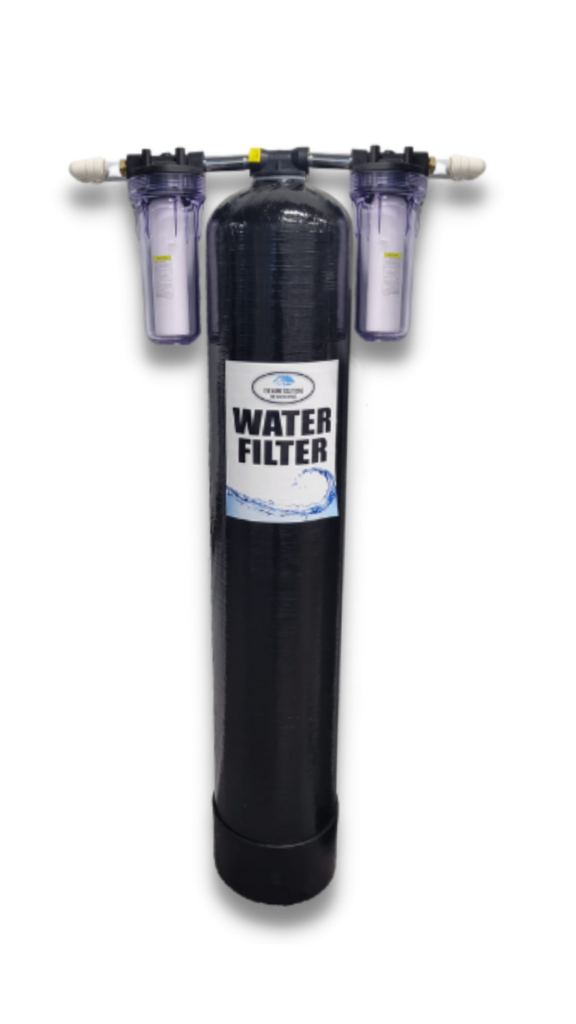
ClearBlu Plus
Filters every tap and shower: chlorine, chloramine, sediment, taste and odour.
See ClearBlu Plus