In this guide
Whole-home filtration and reverse osmosis both make water better, but they solve different problems. One treats every tap in the house; the other purifies drinking water at one sink. Many homes end up with both.
The benefits of a whole home water filtration system
Better water at every tap
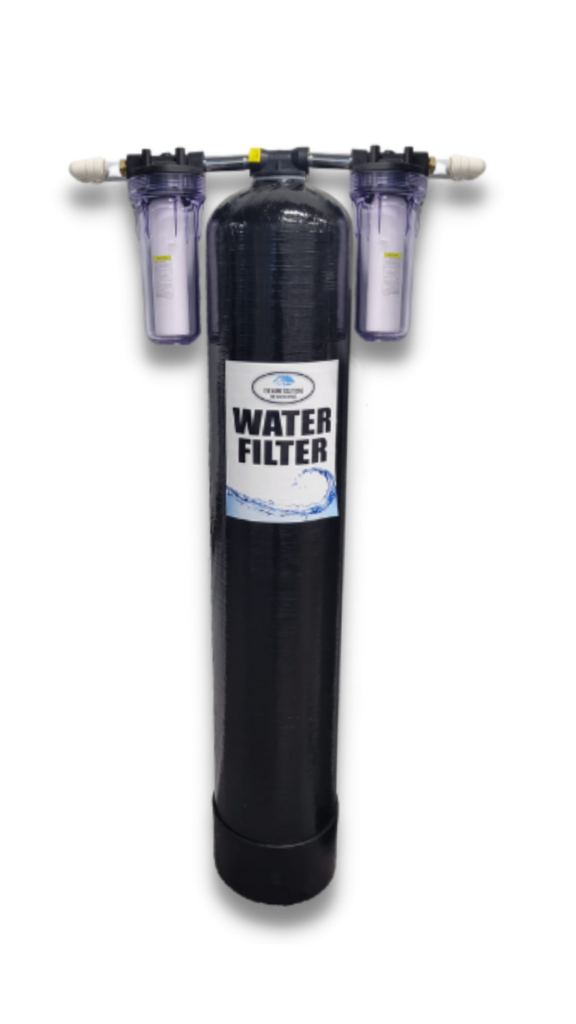
A whole-house system is installed where water enters the home, so the kitchen, bathrooms and laundry all get filtered water.
Less chlorine and sediment
Carbon and KDF media remove chlorine, chloramine and sediment, and reduce some chemicals and metals, before the water reaches anyone in your family.
Gentler on skin and hair
Showering in water without chlorine is noticeably gentler, especially for sensitive skin.
Longer appliance life
Less sediment means less wear on valves, dishwashers and water heaters. (For scale, you'll want a softener.)
What reverse osmosis does better, and its limits
Reverse osmosis removes far more dissolved material than a carbon filter, including lead, fluoride and salts, which is why it makes the best drinking water. But it's installed at a single tap and sends some water down the drain as it works. Treating a whole house with RO is rarely necessary.
| Whole-home filter | Reverse osmosis | |
|---|---|---|
| Where | Every tap and shower | One faucet, usually the kitchen |
| Removes | Chlorine, chloramine, sediment, odours | Most dissolved solids, lead, fluoride, salts |
| Waste water | None | Some (less with Big Flow) |
| Best for | Showers, laundry, whole-house taste | Drinking and cooking water |
Choose the right system for your needs
If chlorine taste and smell bother you all over the house, start with a whole-home filter like ClearBlu Plus. If you mostly want better drinking water, start with reverse osmosis. A free water test shows which problems you actually have.